Why Smartphone Gaming Is So Popular Today
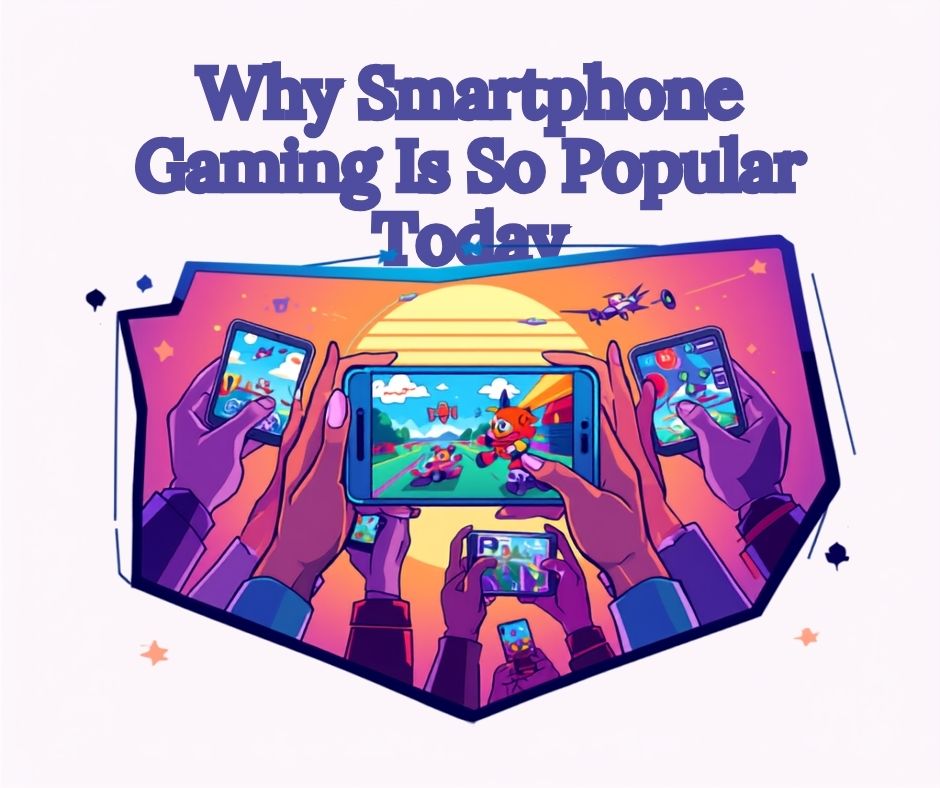
Mobile gaming has gone through the roof in recent years, and while it gets ignored by some of the die-hard console fans or PC enthusiasts, there's now no disputing that this is a trend that's here to stay. It makes sense on many levels, after all: most people now own a smartphone, whereas a console or high-end gaming PC is more likely to be seen as an unnecessary luxury. Furthermore, smartphones are pretty much always on our persons, being used for a lot of everyday tasks, which means that games on these devices can be used to fill even small gaps of time – a lunch break, waiting for a bus, 5 minutes before bed...
There are lots of reasons that smartphone gaming has taken off in such a big way, and the numbers really reinforce that it has. Did you know that an estimated 83% of gamers play mobile games, representing about 3 billion people? Mobile gaming also represents a particularly wide set of demographics, with various age groups and more women appearing in this sector. However, the average mobile session lasts 5 to 8 minutes, which might sound staggeringly short if you're a more traditional console gamer. That doesn't mean mobile games are shallow, though – far from it. With all that in mind, let's figure out how this sector has captured the imagination and enthusiasm of gamers so thoroughly.
Game Variety
First of all, let's acknowledge the history of this world: Snake on a Nokia. That's what many of us think of when we think back to the early days of gaming. Directing a little wiggly line around on a blocky screen and trying not to run it into itself. Oh, how far we've come.
Today, mobile gaming is as varied as you could wish for. You can play almost anything on a mobile, including in-depth RPGs and battlers. The smaller screen does create some limitations, yes, but it's astonishing how well game developers have risen to that challenge and overcome it.
Take, for instance, a visually complex game like poker. It might seem that this would be far too cluttered on a mobile screen, but the simple fact is that it actually looks great. Game designers have figured out exactly how to lay out the cards to ensure each can be read clearly, whether it's in the hand or on the table. They've worked out precisely which extra functions can be tucked away behind a menu until they're needed. They've perfected zoom and enhance functions. They've made a game that was once played at a large table in a dedicated room into something that can be put in your pocket. It's astonishing when you think about that progress.
Of course, online poker had quite a journey to get here, but over the years it has become polished and refined into something that is crisp, intuitive, and highly satisfying to play on a screen of a few inches. And because it's relatively low-powered and doesn't require a lot of processing, it's actually perfect for smartphone gaming; even a low-end device should be perfectly capable of handling a poker game.
This has made the game massively more accessible to people all over the world; they don't have to make time to go to a physical casino (which might not even be local) anymore. They can simply take their phone out and join. They can access online resources for learning about new variants. They can log into tournaments. They can become part of a whole community with channels like Discord and Telegram.
The possibilities are endless, and this reflects the bigger success of smartphones: they fold everything together and create accessibility, even in a busy schedule. That's true for many games beyond poker, but it serves as an excellent example of how much potential there is in this space.
Power Has Increased
Although we mentioned above that many smartphone games are lightweight and don't require too much power, it's also important to acknowledge that phones are, generally speaking, phenomenally powerful these days. They have come along in leaps and bounds, meaning the average smartphone is more than capable of handling a vast number of processing tasks simultaneously, and many are as powerful as PCs. In terms of gaming, that means there's staggering potential here.
A smartphone in 2026 is more than capable of running an in-depth, high-powered RPG. That has opened up gaming options in previously unimaginable ways. Where we once had simple matching games and puzzle options, we can now play games that are, to a degree, comparable to those we used to associate only with high-end consoles and PCs. The only real challenge now exists in the compressed space, but many game developers have come up with clever ways of addressing that, using the various swipe options that are becoming natural to smartphone users to ensure minimal space is needed for effective play.
Batteries Have Improved
Okay, let's start with a caveat: batteries haven't improved as much as you might expect. However, there are several good reasons for that. The first is simple: batteries have improved, but processing requirements have gone up, so you don't notice the improvement much - your phone uses more, meaning overall battery availability doesn't massively increase.
However, from a gaming perspective, that's still good news. If we were using the old-style batteries with today's power requirements, many of the games simply wouldn't be feasible for everyday users; they'd kill your phone far too quickly. So, although our phones don't last all that much longer, battery improvements have actually still had a big impact on gaming - you just don't really see it as an end user. Even so, it's well worth acknowledging this as a key element in the development of smartphone gaming.