Why battery life is becoming the key factor when choosing a smartphone in 2026
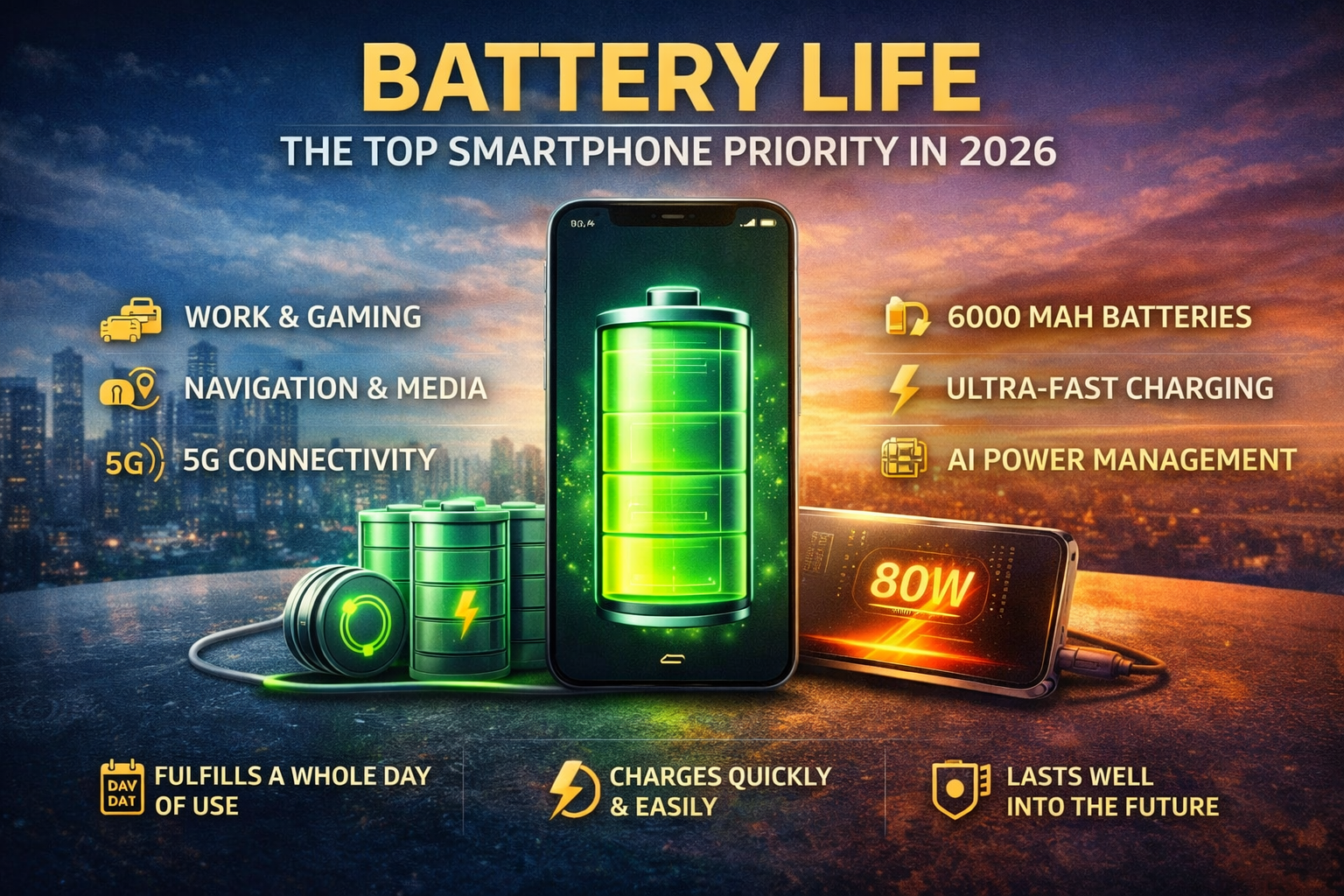
For years, smartphone buyers focused mainly on performance, cameras, and design. However, in 2026, one factor is quietly becoming the most important for many users: battery life.
As smartphones replace more devices and handle more tasks, the demand for longer usage time without charging has never been higher.
Smartphones are doing more than ever
Modern smartphones are no longer just for calls and messaging. Today, they are used for:
• work and productivity
• gaming and streaming
• navigation and travel
• content creation and social media
All of these activities consume significant power, especially when combined throughout the day.
The impact of high-performance hardware
New processors are faster and more efficient, but they are also more powerful. Combined with high-refresh-rate displays and advanced cameras, this leads to increased energy consumption.
Features like:
• 120 Hz or 144 Hz screens
• AI-based processing
• 5G connectivity
can quickly drain the battery if not properly optimized.
Bigger batteries are the new trend
To meet growing demands, manufacturers are increasing battery capacity. Devices with 5000 mAh are now standard, while some models are pushing beyond 6000 mAh.
This shift allows users to:
• get through a full day of heavy use
• reduce charging frequency
• rely on their device without constant anxiety
Battery size is no longer a secondary specification — it is becoming a key selling point.
Fast charging changes user behavior
Another major development is ultra-fast charging. Some smartphones now support charging speeds of 80W, 100W, or even higher.
This means:
• a full charge in under an hour
• quick top-ups during the day
• less dependence on overnight charging
Fast charging does not replace battery capacity, but it significantly improves convenience.
Software optimization matters more than ever
Hardware alone is not enough. Software optimization plays a crucial role in battery performance.
Modern systems use AI to:
• manage background apps
• optimize power consumption
• learn user habits
This helps extend battery life without affecting performance.
Battery health and longevity
Another growing concern is long-term battery health. Users are keeping their devices longer, which makes battery degradation more noticeable over time.
Manufacturers are responding with:
• smarter charging algorithms
• battery protection modes
• improved cell technology
These features help maintain battery performance over several years.
Why users are prioritizing battery life
In real-world usage, battery life often matters more than raw performance. A fast phone is useless if it runs out of power halfway through the day.
Users are increasingly choosing devices that offer:
• reliability
• long usage time
• consistent performance throughout the day
This shift is changing how smartphones are designed and marketed.
Final thoughts
In 2026, battery life is no longer just another specification — it is one of the most important factors when choosing a smartphone.
As devices become more powerful and more essential to daily life, the ability to rely on your phone all day without worrying about charging is becoming a top priority for users worldwide.
Manufacturers that understand this shift and deliver both performance and endurance will have a clear advantage in the evolving smartphone market.